While admitting he shares some blame for the widening partisan divide during his term in office, President Obama dismissed the notion that he's responsible for the rise of Donald Trump, who has harnessed voter anger during his presidential run, urging GOP elites to do some "introspection" about the how "the politics they've engaged in allows the circus we've been seeing to transpire."
"I'm not going to validate some notion that the Republican crackup that’s been taking place is a consequence of actions that I’ve taken..."
Obama: The GOP created "an environment where somebody like a Donald Trump can thrive" https://t.co/Syw4ZVotVC https://t.co/avHzLxWsZa
— CNN Politics (@CNNPolitics) March 10, 2016
Despite his feuds with Republicans in Congress, Obama insisted that he wants “an effective Republican Party.”
“I think this country has to have responsible parties that can govern,” he said, adding the GOP could “challenge some of the blind spots and dogmas in the Democratic Party” on issues such as trade.
He pointed a finger at conservative media and GOP leaders for fueling “a notion that everything I do is to be opposed; that cooperation or compromise somehow is a betrayal; that maximalist, absolutist positions on issues are politically advantageous; that there is a ‘them’ out there and an ‘us,’ and the ‘them’ are the folks causing the problems you’re experiencing.”
To this line of reasoning we offer the following simple reality of check of the fiction President Obama is peddling...
Of course, one has to believe Obama because he is 'Presidential' and would never say anything "outrageous" or lie...
So did he or didn't he? No matter - Trump is here now... and everything's about to really "change."


(Image: Thinkstock)
Sharapova has been taking the banned drug for a decade due to health concerns. It didn’t take long for advertisers to abandon the tennis star. Time will tell how Sharapova will recover from this, on and off the courts.
[Related: Will the ‘Pay Gap’ Between Serena Williams and Maria Sharapova Close?]
Sometimes a setback is nothing but a ‘setup for a comeback,’ especially if you have a support team and tools to turn trials into triumphs. Here are just a few examples of those who refused to cower.
VANESSA L. WILLIAMS: Actress and award-winning R&B singer/songwriter Vanessa Williams broke ground in the world of pageantry and was the first black woman crowned Miss America in 1983. But Williams’ historic win was short-lived after nude photos featuring her and another woman surfaced in Penthouse magazine. As a performer, she rebounded with her 1991 album release, The Comfort Zone, which earned five Grammy nominations and lead to acting roles from Broadway to the big screen. The television and film star is a Legacy Award recipient and speaker at the 2016 Black Enterprise Women of Power Summit.
DESIREE ROGERS: When President Barack Obama was elected as the nation’s first African American Commander-in-Chief in 2008, he handpicked fellow Harvard alum and long-time friend Desiree Rogers to join his dream team. Named among BE’s Top 75 African Americans in Corporate America, Rogers would make history as the first black White House social secretary. She resigned after a couple crashed the Obama administration’s first state dinner. Today, she serves as CEO of Johnson Publishing Co., publisher of EBONY magazine.
MICHAEL VICK: His involvement in Bad Newz Kennels dog-fighting ring cost him endorsements with big names such as Nike, a large fan base and his reputation. After being released from prison, the man formerly known as the league’s highest-paid player worked a $10-an hour construction job, before assisting in children’s health and fitness programs at the Boys and Girls Clubs. Two years later, Vick completed a successful season with the Philadelphia Eagles.
WALT DISNEY: The Walt Disney Co. (now Disney Corp.) and its cartoon animation pioneer weathered several major financial setbacks in the late 1920s and 1930s. His first was losing rights to the popular Oswald the Lucky Rabbit character. His company was $4 million in debt by the early 1930s. With barely enough cash to finance the project, he released Snow White and the Seven Dwarfs in 1938. The blockbuster movie sprung the company out of bankruptcy and bankrolled Walt Disney Studios in Burbank, Calif.
STEVE JOBS: After his forced resignation from Apple Computer in 1985, Jobs spent years developing NeXT, a computer workstation for educators. But with a high price tag and reports of numerous bugs, sales never materialized. Apple acquired NeXT in 1996, bringing Jobs back to the company as interim CEO. He developed the iPod, iPhone, and iPad, making Apple one of the most successful Fortune 500 companies of the past decade.
Submitted by David Stockman via Contra Corner blog,
The casino is incorrigible. After a monumental short squeeze that has lifted the averages right into the jaws of danger, Goldman Sachs has the temerity to print the following:
“Our model suggests SPX calls are more attractive than at any time over the past 20 years”.
There must have been a mullets’ breeding frenzy awhile back because it’s hard to fathom how Goldman has any real customers left. Then again, its current preposterous call is just indicative of the horrible threat heading menacingly toward what remains of main street’s 401k investments.
To wit, the Fed and other central banks have thoroughly falsified financial market prices and destroyed all of the ordinary mechanisms of financial discipline. Foremost among these are short sellers and a meaningfully positive cost of carry trades.
Markets are therefore unhinged from any connection to fundamental economic and financial reality, meaning that they are capable of an extended period of spasmodic deadcat bounces that will have only one end result.
Namely, the naïve and desperate among main street investors who still, unaccountably, frequent the casino will presently be taken out back and shot yet another time. The market technicians are pleased to call this “distribution”. Would that someone on Wall Street man-up and amend the phrase to read ” distribution…….of losses to the mullets” and be done with the charade.
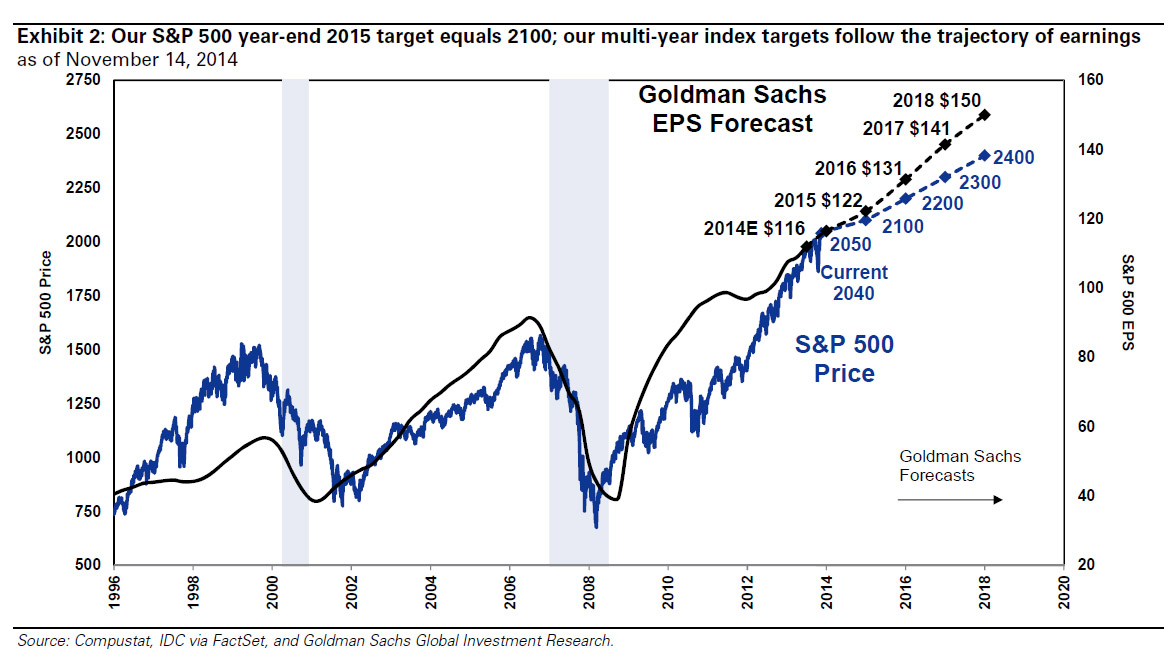
The S&P 500 is heading through 1300 from above long before it ever again penetrates from below its old May 2015 high of 2130. And now that 97% of Q4 results are in, there is a single number that proves the case.
Reported LTM profits as of year-end 2015 stood at just $86.46 per S&P 500 share. That particular number is a flat-out bull killer. At a plausible PE multiple of 15X, it does indeed imply 1300 on the S&P 500 index.
It also represents an 18% decline from peak S&P 500 reported earnings of $106 per share back in September 2014. And more importantly, it means that the robo-machines and hedge fund gamblers have traded the market back up to 23.1X earnings.
That’s off the charts…….except for when recession has already arrived unannounced by the hockey stick factories of Wall Street.
But here’s the thing with respect to the scarlet 23.1X numerals now painted on the casino’s front entrance. It comes at a time when the so-called historical average PE ratios are way too high for present realities. That is, in a world sliding into a prolonged deflationary decline, capitalization rates should be falling into the sub-basement of history.
Why? Because current earnings are worth far less than normal owing to the prospect that renewed earnings growth anytime soon is lodged somewhere between zero and none.
So when capitalization rates should be plunging the casino has them soaring, while pretending its all awesome on the earnings front. In a nearby post, Lance Roberts puts the story in devastating historical context.
For the third time this century, corporate earnings are already in free fall, yet the Wall Street hockey sticks are still pointing archly to the upper right of the chart.
Yet this time the backstory is even sketchier. When reported S&P 500 earnings peaked at $84.92 per share in June 2007 (LTM basis), they had grown at a 6.8% annualized rate since the prior peak of about $54/share in Q3 2000. By contrast, at the reported $86.46 level for the LTM period ending in Q4 2015, the implied 8-year growth rate is…….well, nothing at all unless you prefer two digit precision. In that case, the CAGR is 0.22%.
That’s right. Based on the kind of real corporate earnings that CEOs and CFOs must certify on penalty of jail time, profits are now barely above the June 2007 level, and are once again heading down the slippery slope traced twice already during this era of central bank bubble finance.
Yes, the sell side stock peddlers will tell you that notwithstanding the fact that Uncle Sam spends upwards of $1 billion per year pursuing accounting malefactors, these GAAP profits are to be ignored because they are chock-a-block with non-recurring items.
Well, yes they are. As an excellent recent Wall Street Journal investigation showed, the Wall Street version of ex-items earnings came in for 2015 at $1.040 trillion for the S&P 500. But that was 32% higher than actual GAAP earnings of $787 billion!

.
Not exactly. The above chart has been generated over and over and has been spectacularly wrong nearly as often, and most especially at turning points in the business cycle.
Indeed, the yawning $253 billion gap between reported earnings and the Wall Street ex-items concoction for 2015 is nearly the same magnitude as the disconnect in 2008/early 2009. And like back then, the massive one-timers consisted of real corporate cash and capital that was destroyed——more often than not owing to bad business decisions that had earlier resulted from central bank falsification of interest rates and the price of debt and equity securities.
For instance, during 2015 one part of the gap was accounted for by the fact that the energy sector of the S&P 500 reported actual losses of $45 billion collectively but on an ex-items basis claimed profits of $48 billion. Did that $93 billion difference amount to a financial nothing?
No it didn’t. Instead, it was comprised primarily of massive write-downs of the carrying value of oil and gas reserves. Yet it was the global credit boom enabled by central banks which first drove the price of oil above $100 per barrel and encouraged massive malinvestment in high cost and excessive reserves.
And then, to add insult to injury, it was the drastic post-crisis repression of interest rates under the ZIRP and NIRP regimes which ignited a massive scramble for yield among money managers and homegamers alike. This central bank caused deformation, in turn, encouraged E&P companies to borrow upwards of $400 billion on the junk bond and junk loan market to fund investments in shale and elsewhere which were never remotely economic.
Those giant write-downs may be construed by Wall Street as non-recurring irrelevances, but in fact they amount to dead weight losses of real capital.
The same is true with the other sectors analyzed by the WSJ investigation. Materials companies reported $13 billion in GAAP earnings compared with $30 billion in ex-items profits. And health-care companies earned $104 billion under GAAP versus $157 billion as imagined by Wall Street analysts. Yet once gain, the $70 billion difference in these two sectors wasn’t chump change, nor was it invisible fairy dust.
For the most part it represented asset write-offs and restructuring charges from uneconomic investments and failed M&A deals. That is, the very thing which central bank falsification of financial prices inevitably fosters.
Even in tech, the degree of earnings fudging by Wall Street last year was egregious. While the hockey stick brigade dutifully reported $218 billion of aggregate profits for the tech sector, the reports sent to the SEC showed only $176 billion. Among that $42 billion of invisible red ink was a lot of busted M&A deal write-offs and stock options costs that do absolutely dilute shareholder earnings.
In a recent BloombergView post on the folly of negative interest rates Michael Schuman got it spot on. While he was focusing on the absurdity of the fact that investors are now paying cash to the government of Japan when it borrows ten year money, the general principle is universal.
The culprit is the Bank of Japan. The entire purpose of its unorthodox stimulus programs — quantitative easing, negative interest rates — is, in effect, to get prices wrong: to press down interest rates below where they would normally go and force banks to lend money in ways they normally wouldn’t. The BOJ, in other words, is trying to alter prices to change the incentive structure in the economy in order to engineer certain results — to increase inflation, encourage investment and spark growth.The problem is that the BOJ hasn’t achieved any of those objectives. Inflation in January, by one commonly used measure, was a pathetic zero. Gross domestic product has contracted in two of the past three quarters.
Instead, the BOJ is creating new problems by undermining the price mechanism. The central bank is buying up so many government bonds that it has effectively stripped them of risk to the investor and cost to the borrower. Investors probably bought up the bonds with negative yields speculating that they could flip them to the BOJ.
That’s what might otherwise be called an ambush. The trillions of speculator dollars crowded into trades of this type throughout the global financial markets will never get through the narrow door of liquidity that remains in the casinos. The dotcom and the post-Lehman meltdowns were only the rehearsal.